See the Shroud in 3D
The faint image on the cloth holds 3D information that a painting or a photograph does not. Turn it, compare it, and see one artist's idea of the man it shows.
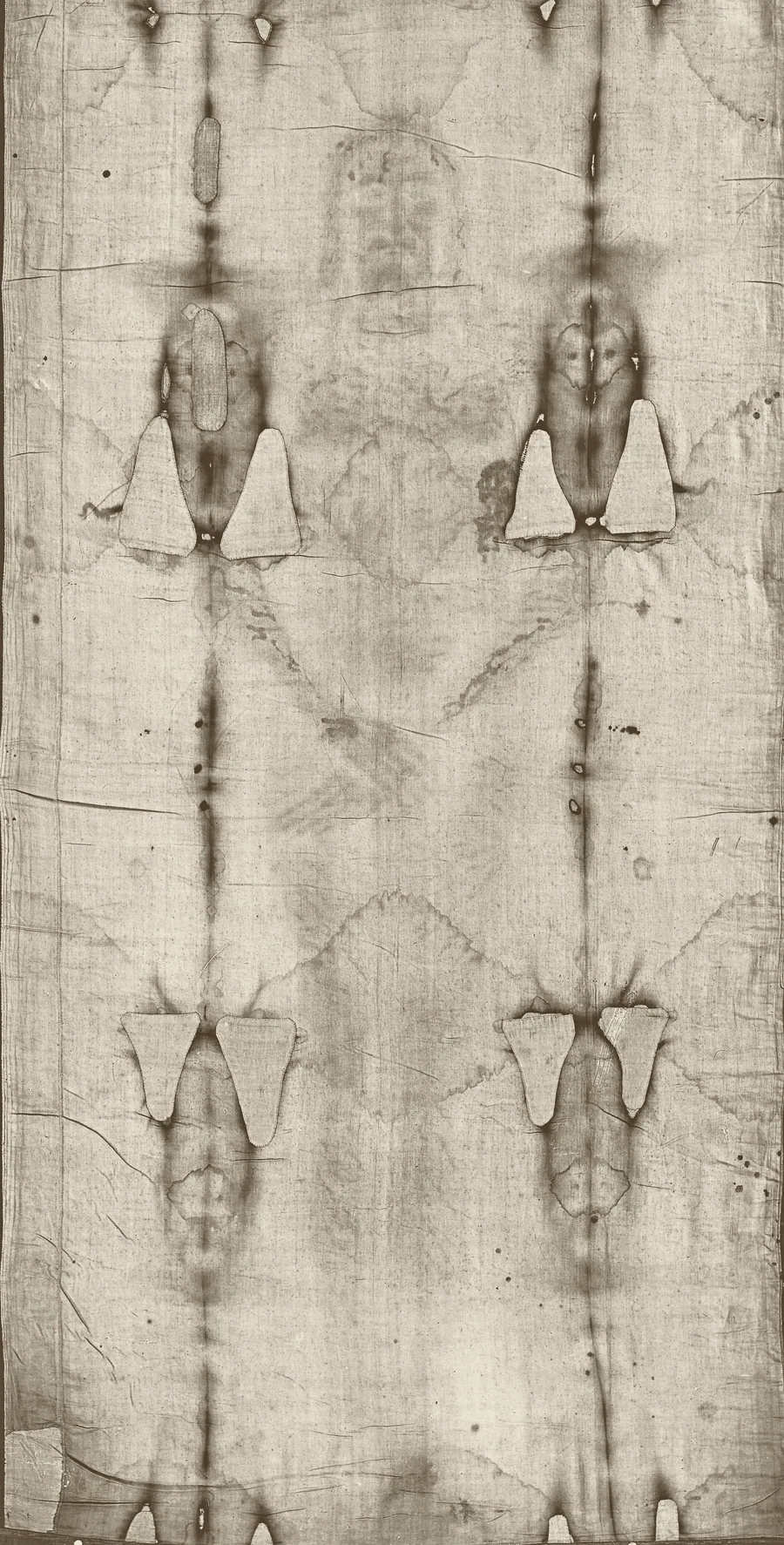
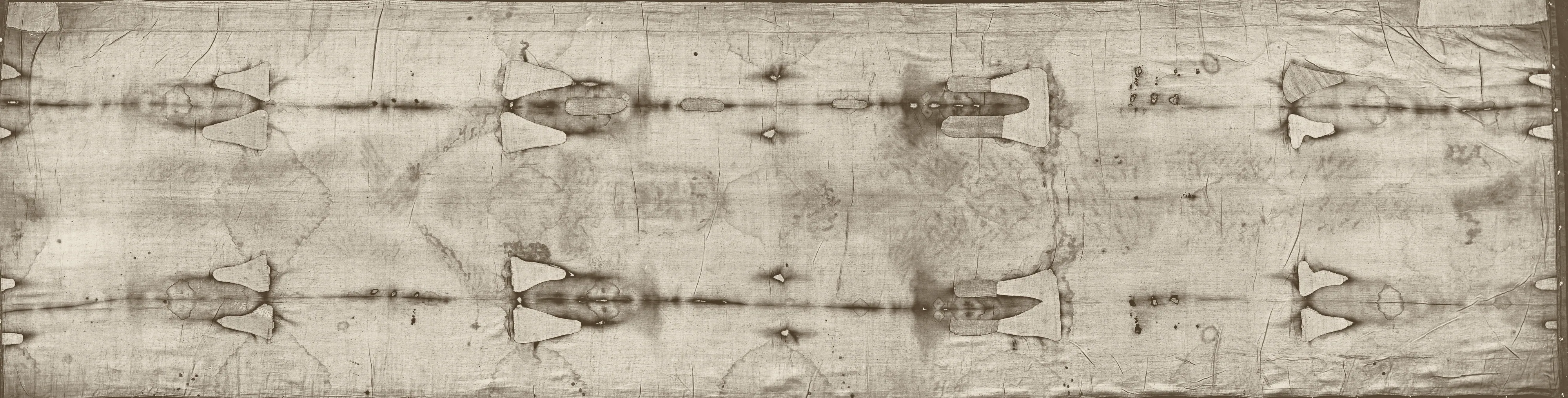
Why there is a front and a back image
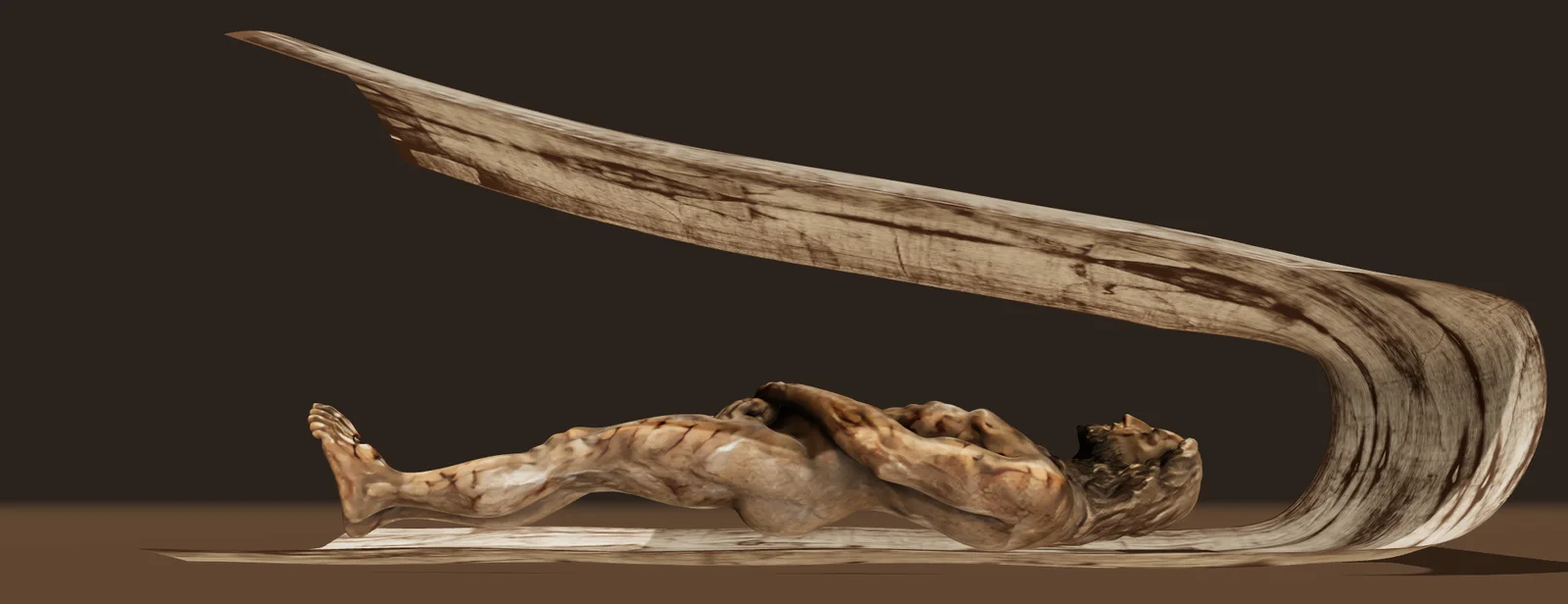
The Shroud is one long cloth, about 4.4 meters. It was laid under the body, folded over the head, and brought down over the front to the feet. So the front of the body left the front image, the back left the back image, and the two heads meet in the middle of the cloth.
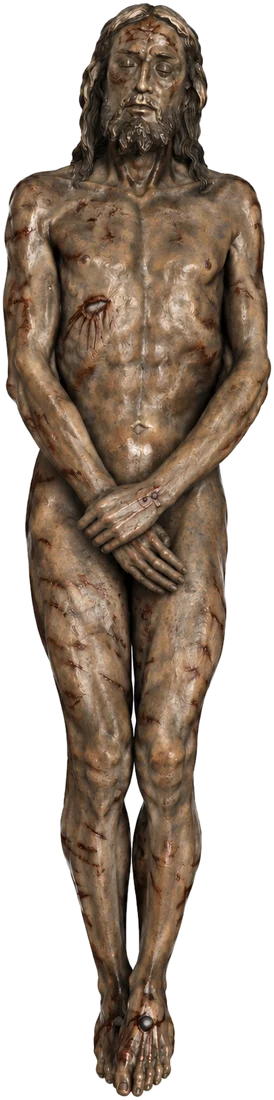
Artistic interpretation, not evidence.
The image in 3D
When you turn the brightness of a normal photograph into height, you get a distorted mess: the nose sinks, the shadows rise, the background bulges. When you do the same with the Shroud, you get a coherent face and body. Compare them yourself. Both views below use exactly the same method.
Fair warning: our 3D views are a simple re-creation of the VP-8 idea, smoothed for the web. They show the principle. They are not a scientific measurement.
One artist's interpretation
What might the man on the cloth have looked like? We made this figure with AI: an image from ChatGPT, turned into 3D with MakerWorld. It follows the marks on the cloth, such as the wounds, the crossed hands and the long hair. Slide to lay it over the 1931 photograph and compare.
An artistic interpretation, made with AI. Not evidence, and not a reconstruction of a real body.